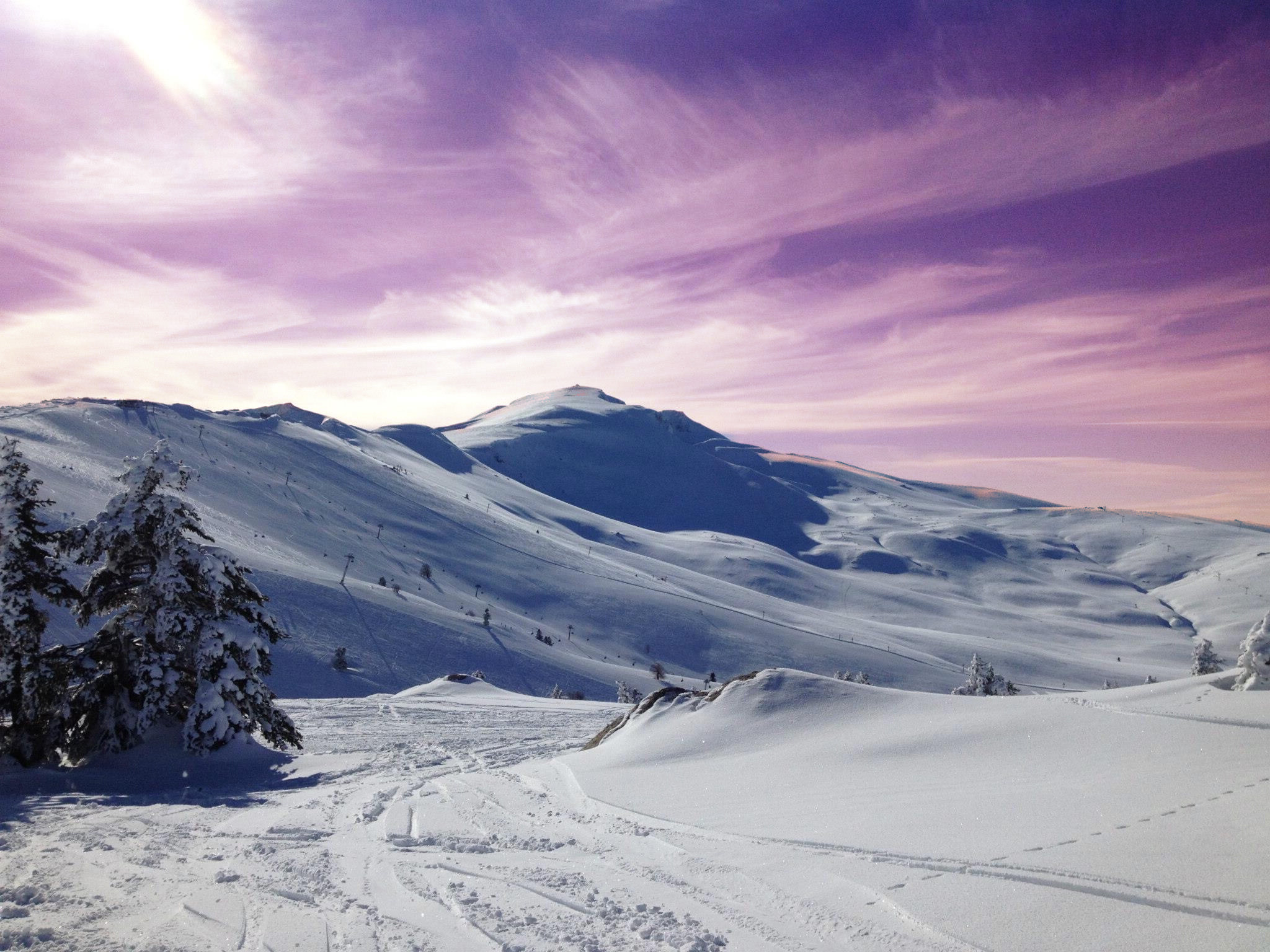
Uludağ: Summit of Nature and History
Uludağ, one of Turkey’s highest and best‑known mountains, rises to 2,543 meters and is one of the most important natural areas of the Marmara Region. Known in antiquity as “Olympos Misios”, the mountain has attracted nature lovers and communities of different beliefs throughout history. Uludağ, which also held an important place in the Ottoman period, is today protected as a national park.
Uludağ stands out not only for winter tourism but also for the rich natural life it offers throughout all four seasons. With its endemic plant species, the mountain is one of Turkey’s most valuable botanical regions and hosts around 1,320 plant varieties. In particular, yellow crocuses, plateaus where feral horses roam freely, and dense forests make the region an open‑air museum for nature lovers.
Hosting Turkey’s most popular ski resort in winter, Uludağ offers opportunities for nature walks, camping, flora observations, and birdwatching in spring and summer. As you ascend from the foothills to the summit, changing climate zones present visitors with a different ecosystem step by step.
Bursa, located right next to Uludağ, completes this natural beauty with its historical heritage. As the first capital of the Ottoman Empire, the city offers cultural richness with the Grand Mosque (Ulu Cami), Green Tomb (Yeşil Türbe), historic inns, and thermal baths. Visitors to Uludağ therefore have the chance to experience a unique journey of discovery where nature and history intertwine.
Uludağ is one of the natural symbols of the Marmara Region, with a summit reaching 2,543 meters. Known in antiquity as “Olympos Misios”, the mountain has attracted outdoor enthusiasts and different cultures throughout history. Today, protected as a national park, Uludağ offers visitors a unique experience with its four‑season beauty.
With its rich ecosystem, Uludağ is home to more than 1,300 plant varieties. Alongside endemic species, vast forests, climate bands that change at different elevations, and feral horses roaming freely make it a natural treasure. In winter, it is an ideal center for skiing and snowboarding with its white snow cover; in spring and summer, it is preferred for hiking, camping, and flora and fauna observation.
Uludağ visits become even more meaningful when paired with Bursa’s historical richness. As the first capital of the Ottoman Empire, Bursa offers cultural depth with its historic mosques, inns, thermal baths, and the village of Cumalıkızık, which is on the UNESCO World Heritage List.
An inseparable part of this journey is gastronomy. Bursa has one of Turkey’s strongest culinary cultures. While İskender kebab, pideli köfte, and cantık are symbols of the city, chestnut candy and süt helvası are favorites for dessert lovers. In the villages on the foothills of Uludağ, regional breakfasts, natural products, and homemade jams offer a warm, local table experience. Both in the cool mountain air and within Bursa’s historic texture, this rich cuisine leaves travelers with an unforgettable taste.